The cathedral and the casino
Frederik Voet
August 31, 2026
- This is some text inside of a div block.

At his last annual meeting as CEO of Berkshire Hathaway, Warren Buffett described American capitalism as a cathedral with a casino attached.

The cathedral is the productive economy - people invest capital, labor, and time to create goods and services that other people need.

The casino sits next door. There is a lot more noise in the casino. Money changes hands quickly. Fortunes are made and lost while people make bold statements about what might happen next.

We are living through an extraordinary period for technology. Hundreds of billions of dollars are being invested into models, chips, data centers, energy, autonomous systems, and ideas that - only a few years ago - would have sounded like science fiction.

Investors and operators who want to succeed in this new age are all trying to answer the same question: which businesses in the AI economy will evolve to be cathedrals and which will ultimately be casinos - and how can technology impact the way cathedrals are built? 

Part 1

Optionality and cyclicality

Buffett’s point was not that we should close the casino. Willingness to put capital at risk with the hope of making a big return in the event of an unlikely outcome enables innovation. 

His point instead was to caution investors to make sure the casino does not overtake the cathedral - and to know which building you’re in at a given point in time.

The book Engines that move markets draws parallels between the early 2000s technology bubble and the railroad mania of the 1840s. Big promises against short timelines drive up valuations, which leaves investors who want to beat the market with no choice but to join in and place aggressive bets. Railroads did end up changing the world, but a lot of the early capital did not survive the journey.

We can certainly see traces of this in the AI ecosystem today: pre-revenue companies raise billion dollar seed rounds, folks with no prior investment experience manage highly leveraged AI-focused funds, and divergence in performance between individual stocks has surged to the highest level in decades.

Bill Gurley in a recent interview referenced a book published shortly after the bursting of the 2000s technology bubble to support the idea that AI can simultaneously live in the cathedral and the casino: 

If the wave is real, then you're going to have bubble-like behavior. They come together as a pair, precisely because anytime there's very quick wealth creation, you're going to get a lot of people that want to come try and take advantage of that or participate in it. There's a real technology wave that's fundamentally changing the world. And there's also massive speculation simultaneously.”

There’s an old saying in venture: “Being too early is the same as being wrong”. 

The S&P 500 only decisively surpassed its technology bubble peak in 2013. The Nasdaq did not reach its peak again until 2015. At the same time, folks who invested in Amazon or Apple in the late 90s and managed to ride out the different cycles were rewarded handsomely.  

Long term players must ask themselves how they can be early and right - and stay in the game long enough to see the upside play out.

Our circle of competence does not include predicting which model providers will be dominant five years from now, or how much value will accrue to them vs the chip makers - we prefer to partner with businesses that have the foundations upon which we can build our cathedral, regardless of who ends up supplying the raw materials. 

We believe that opportunity exists nowhere else more clearly than in professional services.
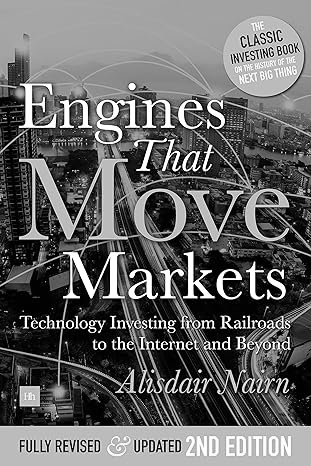
BOOK REFERENCE
Engines that move markets

This engaging book offers a comprehensive history of industrial development and market-shaping industries and their impact on how we invest today.

BUY BOOK
Part 2

How to spot a cathedral

Cathedrals are hard to miss once they’re fully built - the problem is that by then everyone else can see them too. The real opportunity is to spot the potential before the structure is completed.

Cathedrals tend to have five things in common:

Foundation In professional services, these are firms that have built a stellar reputation over many years, generate real cash flow, and are constrained by capacity rather than demand. 

Expertise Cathedrals require craftsmen who are each experts in their niche - and together form a network that makes the structure more durable. In professional services, expertise goes well beyond knowing the rules. It comes from years of accumulated context in applying the rules, studying edge cases, and building deep relationships with clients.

Artists Cathedrals are not just durable because they are structurally sound. They are durable because artists turned something functional into something beautiful. The best professional services firms do the same - they go beyond delivering the technically correct answer and focus on delivering a premium service that elevates the client experience.

Followers Cathedrals attract devoted followers. Great professional services firms have clients whose loyalty and admiration borders on the religious. In the best firms, churn is often <5%, relationships span decades, and clients develop a level of trust and loyalty that is hard to displace. 

High stakes Cathedrals deal with questions of ultimate consequence: salvation, mortality, meaning. The best professional services firms also operate in areas where the stakes are unusually high. Complex tax advice, audits, and financial reporting are not optional and the margin for error is basically zero - which is why both regulators and clients want a human in the loop. 

These are the characteristics we look for in the firms we partner with because, once established, they are unusually hard to dislodge.

LLMs will absorb a lot of low-stakes advice. If you wake up with a sore back, you might ask an LLM what stretches to try. But if you’re told you may need heart surgery, you’re not looking for a better chatbot - you’re looking for a great cardiologist. The higher the stakes, the more valuable judgment, context and accountability become. Professional services work the same way.

These businesses do not operate in markets where a new open-source model or a cheaper token price can suddenly reset the competitive landscape - they operate in markets where context barriers are high, workflows cannot be reduced to binary decisions, and trust and accountability are paramount.

META
Footnote

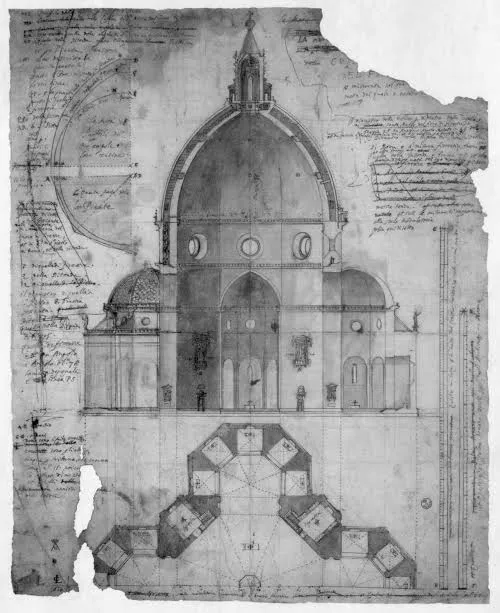
Cigoli’s drawing of Brunelleschi’s Santa Maria del Fiore

Part 3

How to build a cathedral

Building a professional services firm certainly doesn’t feel like a trip to the casino - firm owners need to reinvest earnings to attract top-tier talent and slowly grow the number of clients without compromising on premium service quality. 

There is, however, one trace of the casino inside professional services - firm owners are constantly being sold off-the-shelf software that promises automation, only to end up with different tools that don’t talk to each other and were never really built for the specifics of their business. 

The incentive mismatch is obvious: the vendor wins when the software is sold; the firm only wins if it actually creates value. The house gets paid whether you win or not - and once you’re in it can be particularly hard to get out and switch providers.

That is why we believe the best way to build our cathedral is not to try and sell software or start building  from scratch, but to partner with firms that already have the inherent features of a cathedral (experts, artists, followers, …) and use technology, capital and our network to help them compound.

There is something slightly unfashionable about compounding because nothing very dramatic happens at the beginning. A casino creates extraordinary outcomes through risk concentration, while compounding creates extraordinary outcomes through time.

The destination can look similar but the journey is completely different.

Buffett in the same annual meeting said Tim Cook had made Berkshire more money than he had.

Tim Cook inherited a great business (Apple) and then spent more than a decade improving it. This wasn’t the result of one decision - it was the result of thousands of decisions that ultimately compounded into one of the greatest businesses of all time.

Multiplier’s approach to developing and deploying custom technology is similar to the process of stacking the bricks that make up the cathedral. The unit of progress isn't the individual software deployment - it is the self-reinforcing loop through which each firm can increase capacity, elevate the service quality and experience, win more business, expand into adjacent services, drive referrals and improve collection.

This doesn’t mean seeing results takes a long time - delivering the service with a human layer between the software and the client on the back of increasingly more capable models combined with the data and context that lives inside our firms lets us iterate faster without compromising the premium touch.

The upside we can unlock and share back with the staff in our firms is delivered at a rate and scale that until recently could only be found in casinos - but it does not come at the cost of compromising the foundations of our cathedral. 


Part 4

Celebrating the builders

The cathedral of Florence is revered as one of the greatest structures ever built. People still travel from all over the world to see it because some of the most celebrated craftsmen and artists of their time - Michelangelo, Brunelleschi, Donatello - contributed to making it extraordinary.

Multiplier is not trying to be Michelangelo. We want to be the Medici: backing exceptional artisans, replacing the pen and paper (in some cases literally!) with which they have been forced to write their story, giving them the resources and network to do their best work, and creating the conditions to build an enduring legacy that defines the next era for professional services.

Frederik Voet
Head of Corporate Development
Multiplier Holdings
Similar posts
Talent
Optimism

Keeping optimism as a practical discipline when building firms through uncertainty and change.

Talent
Early Career: Compounding Returns on Time

How the first years in client-facing work compound—attention, craft, and pace—and where to invest your time.

AI
Talent
Ventures
Technology
Human heart // AI muscle

Why professional services and human outcomes—not another consumer app—are the opportunity worth betting a career on.